Thursday, June 19, 2014

Current Events in Science - June 20th

Current Events in Science


Life Science:
Fish Fossils Shed Light on Origin of Jaws
Several fossil specimens of a Cambrian fish called Metaspriggina walcotti recently discovered in Canada shed new light on the development of the earliest vertebrates, including the origin of jaws.  The details in the fossils are stunning; even the eyes are beautifully preserved and clearly evident.  The fossils, which date from 505 million years ago, also show pairs of exceptionally well-preserved arches near the front of the fish’s body.  These arches have long been known to have played a key role in the evolution of vertebrates, including the origin of jaws.  Until now, however, a lack of quality fossils has meant that the arrangement of these arches in the first vertebrates had been hypothetical.  So here we have another example where a prediction is actually verified by observation — a hallmark of science.)  The first of the pairs or arches, closest to the head, eventually led to the evolution of jaws in vertebrates.  Also, the arrangement of the muscles shows that Metaspriggina walcotti were active swimmers, not unlike a trout, and the animals saw the world through a pair of large eyes and sensed their surrounding environment with nasal structures.
http://www.sci-news.com/paleontology/science-fish-fossils-metaspriggina-walcotti-origin-jaws-01986.html
Earth Science:
Canadian Scientists Discover Northernmost Perennial Spring
A team of researchers has announced the discovery of the earth’s highest latitude perennial spring, located in the polar desert of the Canadian High Arctic.  The Ice River Spring demonstrates that deep groundwater circulation through the cryosphere occurs, and can form gullies in a region of extreme low temperatures and with morphology remarkably similar to those on Mars.  Recordings show that this spring flows year-round, even during 24 hours of darkness in the winter months, when air temperatures are as low as –50°C (–58°F). 
Climate Change:
Earth Has Its Warmest May on Record
Two of the leading centers that track global surface temperatures have reported their data for May, and they both found it to be the warmest such month on record for the planet.  NASA found that May had an average global temperature that was 1.38 degrees Fahrenheit above average, which would make it the warmest such month, coming out far ahead of May 2012.  The Japanese Meteorological Agency's separate analysis also found both May and the meteorological spring months of March through May to be the warmest on record.  Later this week, the National Oceanic and Atmospheric Administration (NOAA) will release their global numbers, which typically closely match the other centers’.
http://mashable.com/2014/06/17/earth-warmest-may-spring/
Physical Science and Technology:
Silicon Could Be Replaced By Carbon Nanotubes in Many Circuits
When it comes to electronics, silicon will now have to share the spotlight.  Researchers have developed a flexible, energy-efficient circuit using carbon nanotubes.  Carbon nanotubes consist of carbon atoms arranged into microscopic tubes.  These could take the place of silicon as the traditional material used in electronic chips, since carbon nanotubes are more transparent, flexible, and lower cost.  The potential applications for this kind of integrated circuitry are numerous, including light-emitting diodes, digital circuits, radio frequency identification tags, sensors, and wearable electronics. Even heads-up displays on vehicle dashboards could soon be a reality.  The new technology also has medical applications.  To obtain medical information from a patient such as heart rate or brainwave data, stiff electrode objects are placed on several fixed locations on the patient's body. With this new flexible circuit, electrodes could be placed all over the patient's body with just a single large but flexible object.

Astronomy:
Galaxy Images Extended to Ultraviolet
Astronomers previously captured long-exposure photos of galaxies in the direction of the constellation Fornax in visible and infrared light.  Galaxies were revealed that are so far away that the light we see today left those galaxies over 10 billion years ago.  Now new photos have been acquired in the ultraviolet part of the spectrum, which reveal the formation process of galaxies, particularly at their younger stages.  The previous lack of information from ultraviolet light made studying the galaxies like trying to understand the history of families without knowing about the grade-school children. The addition of the ultraviolet fills in this missing range.
Science & Society
Thirst for water moves and shakes California
In California’s Central Valley, removing groundwater to irrigate crops may trigger small earthquakes and uplift nearby mountains.  California’s thirst for water is creating unrest. During the dry season, tiny earthquakes rattle the state.  And GPS measurements show that its mountains have begun creeping higher, bit by bit.  Scientists have linked the two phenomena to the heavy pumping of water from natural reserves below California’s Central Valley.  The groundwater provides drinking water and irrigates some of the country’s most productive farms.  All that water has a lot of mass. The ground acts similar to a mattress after you get out of bed.  So removing all that water weight from beneath the Central Valley has allowed the ground nearby to rise back up.  In California, that upward movement has taken the surrounding mountains with it.
https://student.societyforscience.org/article/thirst-water-moves-and-shakes-california 

Wednesday, June 11, 2014

Science News for June 11th

Science News.......
Life Science:
New Fossil Bug Species Found in 45-Million-Year-Old Baltic Amber
Over 99.9% of the species to have ever inhabited the Earth are now extinct.  One member of an extinct bug species was found trapped in a 45-million-year-old honey-colored, transparent piece of Baltic amber.  (Baltic amber is a fossilized tree resin found near the shores of the eastern Baltic Sea in Europe.)  Living species of the same genus, Aradus, commonly live on and under the bark of dead trees, which could be an explanation why so many species are well preserved in amber deposits.  The new species has been named Aradus macrosomus. The specific name comes from the Greek words ‘macros’ (large) and ‘soma’ (body), referring to the unusually large size of the bug.
http://www.sci-news.com/paleontology/science-fossil-bug-species-baltic-amber-01962.html      
Earth Science:
Scientists Discover New Underwater Volcano on Hawai’i
The Hawaiian Islands formed as the Pacific plate moved over a source of volcanism (a “hot spot”).  The islands formed successively, with each island or submerged seamount in the chain successively older toward the northwest, ranging in age from 7 million to 28 million years.  As we know it today, the island O’ahu is the remnants of two eruptions. But scientists have found that extending almost 100 km from the western tip of this island is a large region called the submarine Ka’ena Ridge.  It is that region that has now been recognized to represent a precursor volcano to the island of O’ahu, and on whose flanks the later volcanoes formed, creating the island as we see it today.
http://www.sci-news.com/geology/science-kaena-volcano-hawaii-01931.html          
Physical Science:
Physicists Detect Energy-Carrying “Exciton” in Metal
An interesting fact about the reflection of light is that the photon (particle of light) that gets reflected from a mirror is not the same photon that first hit the mirror.  The original photon gets absorbed and an identical photon is created emitted in a process that involves a kind of particle called an exciton.  Excitons have been difficult to detect, because they last for only one ten-thousandth of a millionth of a millionth of a second!  But now they have been detected.  The ability to detect excitons in metals will help scientists better understand how light is converted to electrical and chemical energy in plants and solar cells.  In the future it may result in more efficient methods of communication using light.

Astronomy:
Gas Dwarfs: Astronomers Identify New Type of Extrasolar Planets
Our Solar system hosts small, rocky terrestrial planets like Earth and Mars and large gas giants like Neptune and Jupiter.  But it’s missing planets between about one and four times the size of Earth.  NASA’s Kepler mission has recently discovered that this type of planet is very common around other stars.
Science & Society
Gender Bias May Influence Hurricane Preparedness
Hurricane names help to make public safety messages memorable, but new research shows that the choice of name may influence how people react to evacuation orders.  Although the World Meteorological Organization assigns the storms alternating male and female names, historical records show that those with more feminine names had higher death tolls.  Could people be avoiding evacuation because they assume that female-named storms will be gentler?  Researchers tested this idea with written scenarios that described an upcoming storm and asked respondents how dangerous they expected the storm to be and whether they would follow a voluntary evacuation order.  No matter which names they used —Victor/Victoria, Christopher/Christine, or selections from the upcoming hurricane name lists — respondents who read about male-named hurricanes judged them as riskier and said they would be more likely to evacuate than people who read about hurricanes with female names.  The researchers say that this may reflect an "implicit sexism" that gets in the way of understanding and responding to public safety messages.  A new naming system perhaps based on animals or objects may be in order, they suggest.

Thursday, March 27, 2014

Dolphin whistle instantly translated by computer

Software has performed the first real-time translation of a dolphin whistle – and better data tools are giving fresh insights into primate communication too

IT was late August 2013 and Denise Herzing was swimming in the Caribbean. The dolphin pod she had been tracking for the past 25 years was playing around her boat. Suddenly, she heard one of them say, "Sargassum".

"I was like whoa! We have a match. I was stunned," says Herzing, who is the director of the Wild Dolphin Project. She was wearing a prototype dolphin translator called Cetacean Hearing and Telemetry (CHAT) and it had just translated a live dolphin whistle for the first time.

It detected a whistle for sargassum, or seaweed, which she and her team had invented to use when playing with the dolphin pod. They hoped the dolphins would adopt the whistles, which are easy to distinguish from their own natural whistles – and they were not disappointed. When the computer picked up the sargassum whistle, Herzing heard her own recorded voice saying the word into her ear.


Read the rest of the article here

Tuesday, February 11, 2014

Petrified National Forest

What Wiped Out the American West? Investigating a Triassic Extinction


Strewn across the dusty ground is the wreckage of a wetland forest that suddenly wilted and died 215 million years ago. Paul Olsen gestures at the broken lumps of white, red, and black quartz scattered about. “You see how it looks ropey?” he asks. He holds up a piece. “It looks like someone took little pieces of rope, snipped them up, and laid them down.”

Olsen believes that these scattered rocks mark the moment of a mass extinction that wiped out many species across North America. He would like to identify the calamity that triggered this extinction. But as I stand beside him in the midday sun, I’m unable to see the subtle clues that his trained eye perceives so easily. As I look at the rocks all about, I simply don’t see the ropey, cylindrical shapes that he’s talking about.

To read the rest of the story, click here...


Friday, February 07, 2014

Alleged jewel thief's kiss for victim leads to DNA fingerprint - and arrest


Alleged jewel thief's kiss for victim leads to DNA fingerprint - and arrest

French police hold man after taking swab from pecked cheek of gagged Paris store owner, then finding DNA database match...

An alleged jewel thief who sealed his crime with a kiss was caught after police analysed the DNA on his victim's cheek. Forensic scientists at the scene swabbed the woman's cheek to isolate the genetic profile.

The robber and an accomplice were said to have tied up, gagged and threatened the owner of a Paris jewellery store after following her home. They poured what they claimed was petrol over her head and told her they would set it alight if she did not give them the codes for the shop alarm.

When one of the robbers returned from clearing out the shop of jewels the pair released the woman, 56, who had been tied to a chair for four hours. It was then that the 20-year-old thief made his mistake. "The crook gave the victim a kiss on the cheek, in what was apparently a sign of compassion after the ordeal he had put her through," a police source told Le Parisien newspaper. "As soon as she was free the victim alerted the police.

"We hoped we could isolate the genetic fingerprint of her assailant. And indeed his DNA was identified and found to be on the national genetic print database."

A few months later detectives discovered the DNA matched a man who was being held by the authorities near Nîmes, southern France, on suspicion of other crimes.

During questioning the man admitted kissing his victim to "make up for the trauma". He has been remanded in custody while detectives trace his accomplice.

Sunday, January 26, 2014

Immortal jellyfish: Does it really live forever?

The Turritopsis nutricula jellyfish has displayed a remarkable ability to regenerate its cells in times of crisis. 
 
 
While it is often joked that cats have nine lives, a certain species of jellyfish has been deemed “immortal” by scientists who have observed its ability to, when in crisis, revert its cells to their earliest form and grow anew. That means that these tiny creatures, 4 mm to 5 mm long, potentially have infinite lives.
 
The creature, known scientifically as Turritopsis nutricula, was discovered in the Mediterranean Sea in 1883, but its unique regeneration was not known until the mid-1990s. How does the process work? If a mature Turritopsis is threatened — injured or starving, for example — it attaches itself to a surface in warm ocean waters and converts into a blob. From that state, its cells undergo transdifferentiation, in which the cells essentially transform into different types of cells. Muscle cells can become sperm or eggs, or nerve cells can change into muscle cells, “revealing a transformation potential unparalleled in the animal kingdom,” according to the original study of the species published in 1996.
 
Since the Turritopsis’ virtual immortality was discovered, so have swarms of genetically identical jellyfish far from their original habitat, including in Japan, Spain and the Atlantic Ocean side of Panama. Researchers have concluded that these multiplying creatures are getting caught in ballast waters, water that is sucked into and pumped out of the long distance cargo ships. Polyps also could be growing on the ship’s hulls. Though genetically identical, these jellyfish seem to have adapted to their new environments. For example, specimens from swarms living in tropical waters have been found to have eight tentacles, while those discovered in temperate regions have 24 or more tentacles.
 
Read the rest here....
 

Dentures-fins for sea turtles

 some kind hearted folks designed replacement fins for a sea turtle that had had its fins nipped off by a shark....http://www.easyoops.com/dentures-fins-for-sea-turtles


Monday, January 06, 2014

Giacobbe Science Blog Introduction

Hi All, Mr. John Giacobbe here, and obviously you've found my private blog....

Welcome to your new(ish) classes! As you know by now, we've redistributed a few things, and I'll be teaching your 8th Grade Science II, 9th Grade Biology II, and Forensic Science II classes.

If you visit this blog every week or so, click though one of the links below, and make a substantial comment on it, you get some extra credit.

For the first one, all you have to do is make a comment that includes your name! Peace of Cake...

This blog goes back a long time, even from before I was a teacher, and you can make as many comments as you'd like.

If you don't want to leave your name in the comment section, you could send your comment to me via email, at jgiacobbe@nakedscience.org

Live long and prosper!


Sunday, December 22, 2013

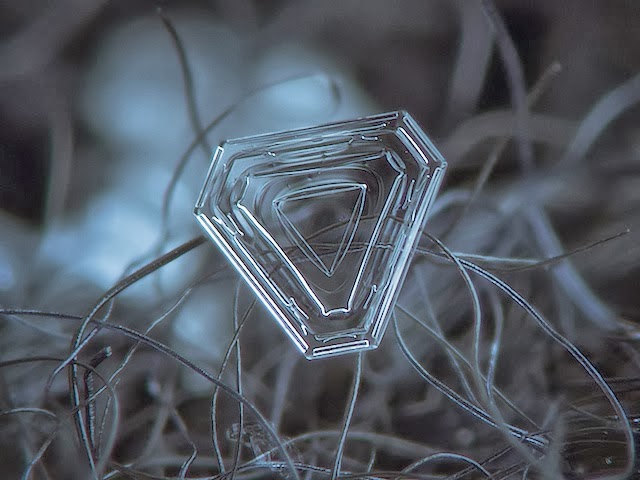
Just some snowflakes...
the littlest things are invariably the most important, 
and interesting...


Thursday, December 19, 2013

Mind control over the Internet


Mind control over the Internet

The idea of mind control usually invokes scenes from sci-fi or horror movies, such as "Star Trek's" Vulcan mind-meld, spiritual possession, malevolent hypnosis or malfunctioning implants. 
 Well, get ready. Human brain-to-brain interfacing – via the Internet, no less – is becoming part real life. And it's not the stuff of horror at all.

In August, a team of researchers at the University of Washington managed to connect their brains using non-invasive technology. Rajesh Rao, a UW computer science and engineering professor, put on an electrode-studded cap and watched a video game, "playing" it with his mind. Across campus, UW psychology professor Andrea Stocco wore a swim-style cap that had a portion equipped with a magnetic stimulation coil.
 
"If you think broadly, I think it opens up a new mode of communication between people," he says. "You can imagine maybe communicating non-verbal types of information, like abstract knowledge, or perhaps communication between people who do not speak the same language."
for the rest of the story, click here

Saturday, December 14, 2013

Yellowstone Supervolcano is a Much Bigger Time Bomb Than We Thought

 The supervolcano that lies beneath Yellowstone National Park is 2.5 times larger than previously thought, it was revealed at an American Geophysical Union meeting. 

Scientists knew the supervolcano was big, and set out to find out just how big, in order to assess the threat level. What they discovered, they said, was "astounding."
Between 125 and 185 billion cubic miles of magma is pooled under the surface, representing an existential threat to America, as well as the rest of the world. One scientist estimates an eruption would be 2,000 times the size of Mount St. Helens.

Thursday, December 05, 2013

Grisly Remains Of 15 Hobbits Discovered In Peter Jackson’s Attic

Grisly Remains Of 15 Hobbits Discovered In Peter Jackson’s Attic

 WELLINGTON, NEW ZEALAND—In an appalling incident that has sent shock-waves through the surrounding community, authorities confirmed Thursday that the decayed, dismembered remains of 15 missing hobbits were found in the attic of highly acclaimed film director Peter Jackson.

Jackson, 52, was reportedly taken into police custody immediately and is now awaiting charges. “At this time, we can confirm that 15 halflings between the ages of 25 and eleventy-one were discovered inside the home of Peter Jackson at approximately 4 p.m. this afternoon,” said Wellington Police District Commander Stephen Jones, adding that authorities were initially called when Jackson’s neighbors complained of “a rotting odor” emanating from his home, after which officers conducted a comprehensive search of the property. “We eventually found a hidden hatch on the perpetrator’s ceiling, which was held shut by three heavy-duty locks. Once we opened the door, we came across the victims, already deceased, all of whom had the hair ripped out from the tops of their feet.”
 

for the rest of the story, click here 

Sunday, September 29, 2013

First in a Series of:  
Ways 'Adventure Time' Can Make You A Better Person

1. Don’t be afraid of things you don’t understand. 

There’s probably a reasonable explanation.


Monday, September 23, 2013


Welcome to all my new students! If you've found this blog, then you know who I am and what I teach. Check out the Forensic Science and Science Fair links for more information. This week's extra credit is real simple. Simply comment on how awesome this blog is, leave your name, and you get 25 points extra credit. So simple, even my wonderful dog Dixie Cousins could do it! Here's a picture of her, if you're curious...


Sunday, March 03, 2013

Of the “pale blue dot,” astronomer Carl Sagan said, “That’s here. That’s home. That’s us. On it everyone you love, everyone you know, everyone you ever heard of, every human being who ever was, lived out their lives. The aggregate of our joy and suffering, thousands of confident religions, ideologies, and economic doctrines, every hunter and forager, every hero and coward, every creator and destroyer of civilization, every king and peasant, every young couple in love, every mother and father, hopeful child, inventor and explorer, every teacher of morals, every corrupt politician, every ‘superstar,’ every ‘supreme leader,’ every saint and sinner in the history of our species lived there — on a mote of dust suspended in a sunbeam.”

Saturday, February 09, 2013

Hey science teachers -- make it fun

Tyler DeWitt: Hey science teachers -- make it fun

Tyler DeWitt recognizes that textbooks are not the way to get young people interested in science. Instead, he teaches science by making it fun and fantastical.


Saturday, January 05, 2013

Welcome Old & New Students to Block III!

For some of you this is new, for some it's familiar. Visit this blog once a week for a new article, image, or video about sciency stuff. Either post a comment or send me an email at jgiacobbe_southpointe@cox.net (with your name in it) for extra credit. It's easy!

For week one Biology students, check out this web page, and tell me what you think of it. Which was your favorite image, and why? National Geographic Photo Contest 2011. Here's a few sample images...


For Forensic Science students, check this one out, and comment on it... Helping Decide Guilt or Innocence


Monday, December 31, 2012

Is The Universe A Computer Simulation?

Is The Universe A Computer Simulation? 

A totally cool article by the lovely and talented 

, with the Huffington Post (who can be reached at
sciencecara@huffingtonpost.com)

Have you ever wondered whether all this--you, your life, the universe--is just a sophisticated computer simulation?

Martin Savage, a physicist at the University of Washington, thinks we can't discount the idea. In fact, he and two colleagues (Silas Beane and Zohreh Davoudi) published a paper in November 2012 exploring the possibility.

... it is the first time where you think, you know, you might result from just a piece of code, writing another piece of code, writing another piece of code. And then you do ask the question about the original simulator, if you like. And so if we are a simulation, we’re probably a simulation from our descendants, right? So, as our universe evolves and becomes more mature, then somebody in that universe launches a simulation to simulate where they came from....

to read the rest, click here

Saturday, December 15, 2012

360 crime scene views - totally mathematical...

360 crime scene views - totally mathematical...

Crime scene forensics: How does it work?


Forensic evidence and the way it was gathered came under close scrutiny in the trial of Stephen Lawrence's killers.

Techniques and practices have developed significantly since 1993 and are now a key part of police investigations from the start.

The basic principle is "every contact leaves a trace" and specks of blood, fibres or fingerprints become silent witnesses against the criminal. Here, we examine forensic science from crime scene to courtroom.
 

For the rest of the story, read here: